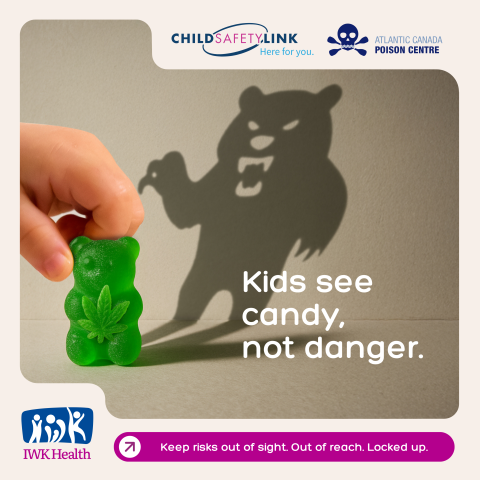
During this year's Poison Prevention Week (PPW) campaign, the Atlantic Canada Poison Centre and Child Safety Link (CSL) are reminding the public that most unintentional poisonings are preventable with proper safety measures in the home. This year’s theme, “Think Like a Kid,” highlights that children are often unable to recognize hazardous household products the way adults do. As a result, these items require careful storage and added attention to help reduce the risk of poisoning.
The Atlantic Canada Poison Centre receives thousands of calls every year about children who have accessed poisons in the home. Nearly one‑quarter of all calls to the Centre involve children under five years old — a reminder of how quickly young children can get into hazardous substances and the importance of prevention.
“There are several key steps that parents and caregivers can do to help prevent these types of poisonings in the home, and it all begins with the safe storage of potentially harmful products,” says Jill Duncan, Team Leader at the Atlantic Canada Poison Centre. “People should be particularly aware of look-alike poisons that might exist in their home, and make sure these are stored in locked cupboards or locking bags. Keeping items ‘up high and out of reach’ is not secure enough.”
Look-alike poisons are hazardous products that closely resemble edible items, which can confuse both children and adults. A few examples of common look-alike poisons include:
- Cannabis gummy candies vs. regular gummy candies
- Blue household cleaning fluid vs. blue sports drink
- Laundry pods vs. soft candies
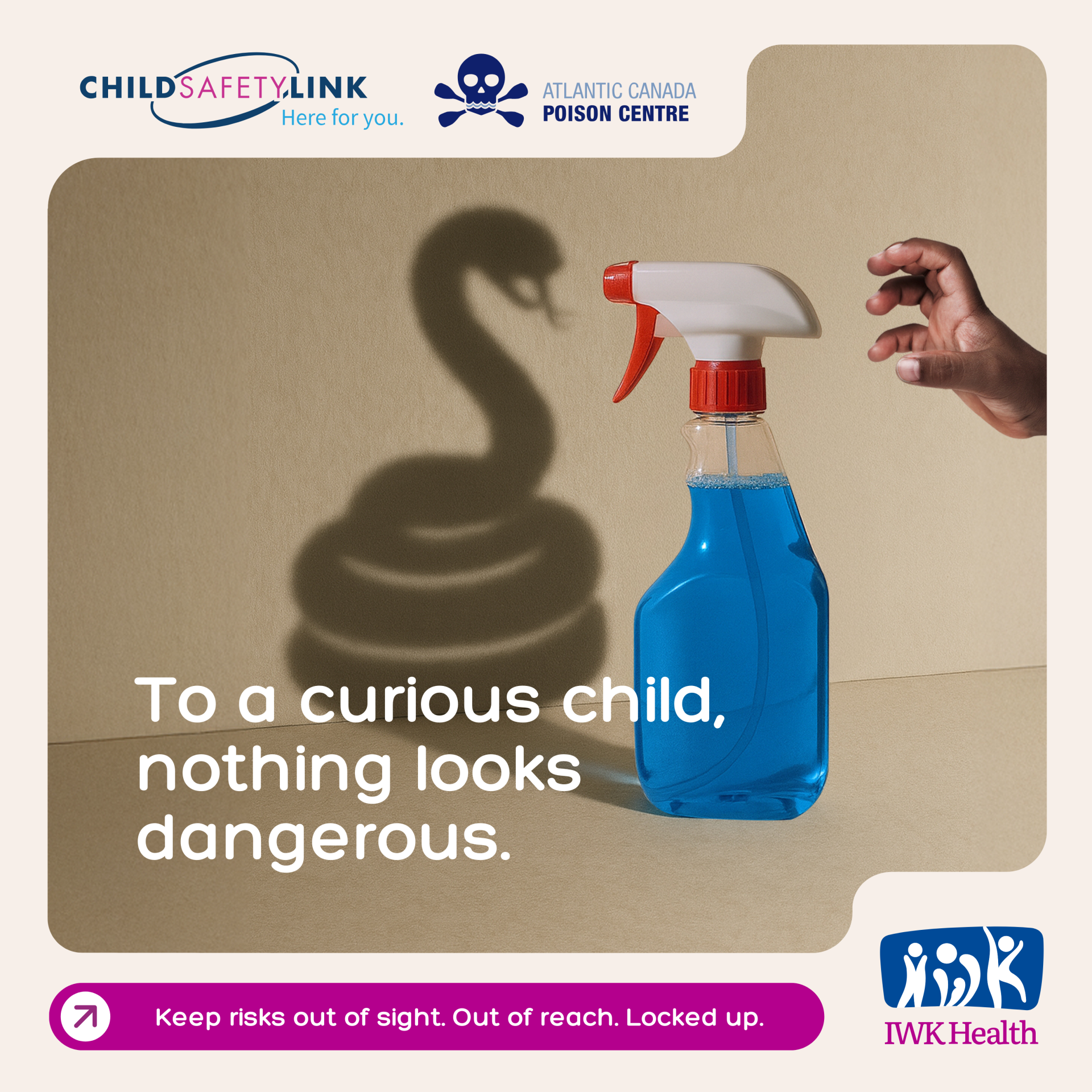
Child Safety Link emphasizes that parents and caregivers should never assume a product is safely out of reach of a young child, whose ability to climb, explore, and access new areas can change daily. Also, caregivers should never rely solely on the safety feature of “childproof” or “child resistant” containers.
“There are significant poisoning risks in many areas of the home, and children are good at finding them,” says Sarah Mavrak, Health Promotion Specialist with CSL. “Given enough time and opportunity, we have seen children as young as two year open ‘childproof’ containers.
We want caregivers to know that locks on containers, bags and cupboards is the most effective way of keeping children safe from home poisonings.”
The Atlantic Canada Poison Centre is available 24 hours a day, 7 days a week as a confidential source of information on poisons and poison exposures. The staff at the ACPC include nurses and pharmacists who are highly trained specialists in poison information and who are supported by on-call physicians. The Poison Centre provides service for all ages (adults and children).
- In NS, PEI and NL, call 1-844-POISON-X (1-844-764-7669).
- In NB, call 911.
Child Safety Link (CSL) is the children’s injury prevention program of IWK Health. CSL will be sharing information on the Think Like a Kid campaign every day during Poison Prevention Week on their social media pages; follow Child Safety Link on Facebook, on Instagram and on LinkedIn at @ChildSafetyLink. For the latest information on poisoning prevention and other children’s injury prevention topics, visit www.childsafetylink.ca.