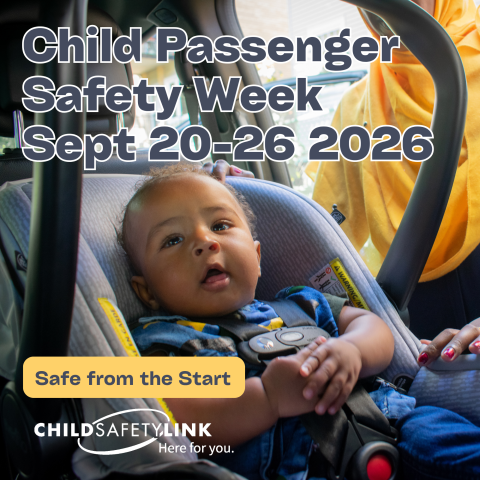
It’s Child Passenger Safety Week and this year's theme, Safe from the Start, focuses on helping families prepare for their baby’s first ride - and every ride after. Throughout the week, we will highlight resources, education, and community support for families and caregivers.
A baby’s first ride home should be a safe one - and so should every ride after. Our goal is to make sure families and caregivers have the clear, practical information and support to feel prepared and confident - from choosing and installing their baby’s first car seat to buckling them safely on that first trip - and every ride after.
Child Safety Link would like to emphasize several important points for parents and caregivers to consider when preparing to transport their baby:
1. Choose a safe seat that fits your baby.
Choose a rear-facing car seat that is approved for use in Canada, fits your baby and vehicle, and has not expired.
2. Install the seat before baby arrives.
Install the seat tightly in the back seat. The seat should be installed at the most reclined angle allowed for your newborn so that their head does not tilt forward and close their airway.
3. Buckle baby snugly every time.
Buckle all parts of the harness. Remove any looseness at the hips and tighten the harness until you cannot pinch any slack at the shoulder. Position the chest clip at armpit level.
4. Use the car seat for travel.
A car seat is designed to protect your baby while travelling in a vehicle. A car seat is not a safe sleep space. Always take your baby out of the car seat when you arrive at your destination.
5. Know what comes next.
When the infant seat is outgrown, move to a larger, rear-facing seat. Your child is safest riding rear facing for as long as they still fit within the limits of their larger, rear-facing seat.
6. Know when and where to ask for help.
Trusted information and trained support are available.
Call Child Safety Link toll-free in Atlantic Canada at 1-866-288-1388 or email childsafetylink@iwk.nshealth.ca.
Child Safety Link: https://childsafetylink.ca/
Contact Us: https://childsafetylink.ca/contact-csl
Find a CPST: http://cpsac.org/find-a-tech
Child Safety Link and our community partners can help families find reliable information and learn how to choose and use the right seat safely.
Health-care providers and hospitals
Health-care providers and hospitals play an important role in helping families prepare for a safe first ride home. Child Safety Link offers free, evidence-informed child passenger safety resources that health-care providers, hospitals and community organizations across Atlantic Canada can order at no charge to share with families. Downloadable resources, instructional videos, and materials in multiple languages are available.
Infant Car Seat Resources for Healthcare Professionals: https://childsafetylink.ca/Infant-Policy
- NEW Updated IWK Infant Car Seat Education Policy
Car seat safety discussions at well-baby visits: https://childsafetylink.ca/well-baby
Order print resources at no cost in Atlantic Canada: https://resources.childsafetylink.ca/